Real Wood vs. WPC: A Strategic Decision to Position Luxury Hotels as Leaders in Sustainability
Last updated: 29 Oct 2026 | 3104 Views |

As wellness tourism continues to grow rapidly, five-star hotels and wellness resorts are looking beyond conventional building materials. They are seeking partners who can deliver exceptional guest experiences while advancing their sustainability commitments.
Choosing between real wood and wood-plastic composite (WPC) is therefore about more than comparing the cost per square metre. It is a strategic investment that can influence brand positioning, long-term operating costs, and overall profitability.
This article takes an in-depth look at the key considerations and explores why real wood, particularly INNO+ WOOD from The Urban Wood when sourced responsibly, can offer compelling long-term value across both financial metrics, such as Total Cost of Ownership (TCO), and less tangible benefits, such as Total Value of Ownership (TVO), for high-end hospitality projects.
1. Total Cost of Ownership (TCO): Understanding Long-Term Value Over 25 Years
One of the most common arguments in favor of WPC is its relatively low maintenance requirements. However, a long-term TCO analysis over a 25-year period can reveal potential hidden costs associated with WPC, as well as the advantages of real wood.
A Distinctive Advantage of High-Quality Real Wood: Restorative Maintenance
Here is a key differentiator: high-quality real wood, such as INNO+ WOOD-CB Timber, is an innovative timber solution designed to withstand challenging weather conditions. One of its key advantages is its potential for restoration through sanding and refinishing.
Rather than requiring complete replacement when the surface deteriorates, real wood can be renewed through appropriate maintenance, potentially extending its service life indefinitely, depending on the product, installation, and maintenance conditions.
By contrast, WPC products typically have a stated service life of approximately 15–25 years, depending on product quality, exposure, and maintenance. Once a WPC installation reaches the end of its service life, extensive removal and replacement may be necessary, creating a significant additional expense that should be considered in the overall TCO calculation.

Key takeaway: Real wood can be a strategic long-term investment, particularly when its maintenance and refinishing costs are lower than the cost of replacing an alternative material. It also offers greater flexibility to refresh the design by changing the surface finish without necessarily replacing the material.
The actual cost advantage should be evaluated through a project-specific TCO analysis that includes initial purchase and installation, maintenance, refinishing, replacement, and end-of-life costs.
2. Total Value of Ownership (TVO): Elevating Brand Positioning and Wellbeing
In today's luxury hospitality market, perceived luxury is closely connected to material quality and the overall guest experience. Real wood can serve as a strategic design element that creates intangible business value and may contribute to stronger commercial performance.
Biophilic Design: The Science Behind a Better Guest Experience
Real wood is a natural fit for biophilic design, an approach that incorporates natural materials and elements to strengthen people's connection with nature. When thoughtfully integrated into hospitality spaces, it can help create environments that support guest comfort and wellbeing.
Potential benefits include:
- Stress Reduction: Research on exposure to natural materials and wood-based environments suggests that these settings may help reduce stress responses, including cortisol levels, under certain condiPotential benefits include:
- Physical Relaxation: Some studies have associated exposure to natural environments and wood interiors with changes in physiological responses, including heart rate and blood pressure.
- Indoor Comfort: Wood can exchange moisture with the surrounding air, helping to moderate short-term fluctuations in indoor humidity under suitable conditions.

Key takeaway: These potential wellbeing benefits can support a more distinctive guest experience. The original article cites figures suggesting that hotels using biophilic design effectively can achieve up to 108% higher total revenue per available room (TRevPAR) and increase average daily rate (ADR) by up to 18% compared with conventional hotels.
These figures should be interpreted in the context of the original research, including its methodology, sample, and comparison criteria. They should not be treated as guaranteed results for every hotel project.
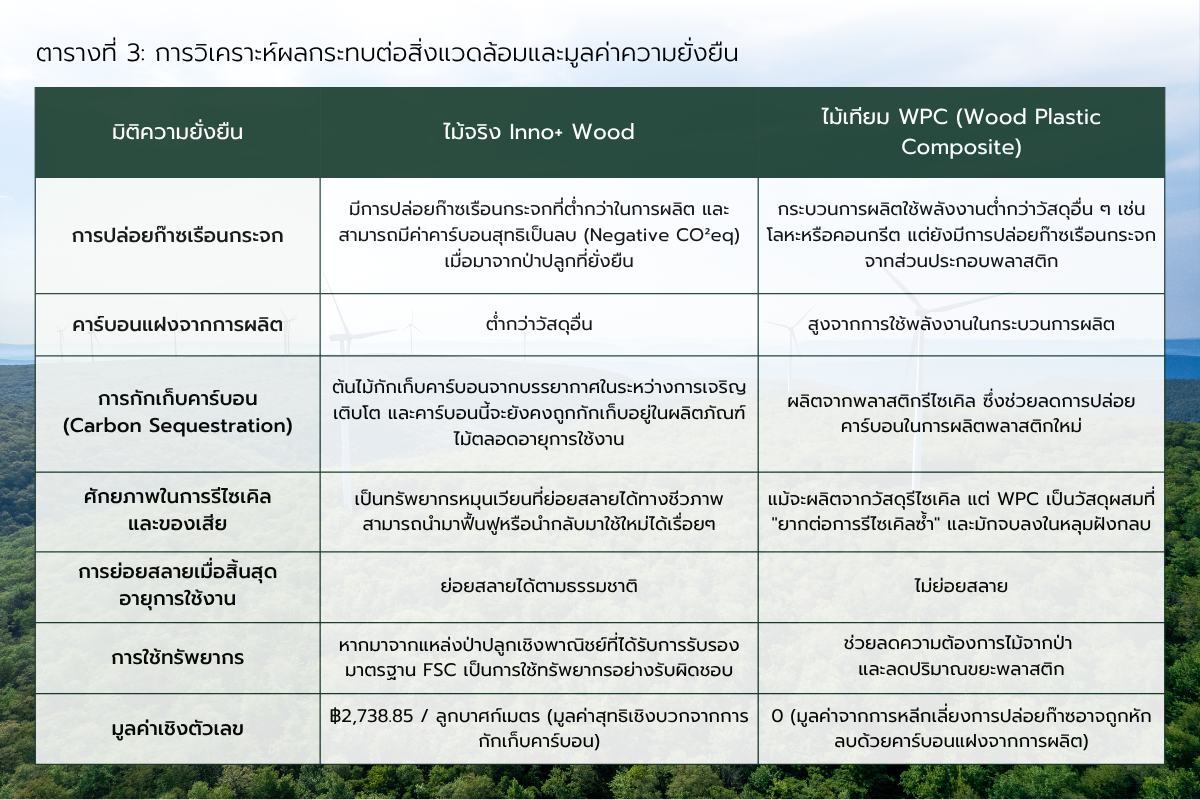
3. Genuine Sustainability: Real Wood as a Carbon Store
As Environmental, Social, and Governance (ESG) considerations become increasingly important to businesses, selecting genuinely sustainable materials is essential.
Real wood can offer environmental advantages over WPC, particularly in carbon storage, renewable resource management, and end-of-life considerations. The extent of these benefits depends on responsible sourcing, manufacturing processes, product lifespan, and disposal or reuse practices.
Carbon Dynamics: The Potential for a Net Carbon Benefit
Real wood can act as a carbon store by retaining carbon absorbed by trees during growth. Some of this carbon remains stored in wood products throughout their service life.
When sourced from responsibly managed forests or plantations, real wood can contribute to lower embodied carbon. However, whether a particular product delivers a net-negative carbon footprint depends on the full life-cycle assessment, including forestry practices, processing, transportation, maintenance, and end-of-life treatment.
Quantifying the Carbon Value
Based on the carbon-credit market calculation cited in the original article, one cubic metre of real wood could represent a positive carbon-storage value of up to THB 2,738.85.
This figure is an illustrative valuation based on the stated calculation, rather than a guaranteed financial return. The actual value depends on the carbon accounting methodology, applicable credit prices, and whether the carbon benefit qualifies for recognized credits.
The WPC Recycling Challenge
Although WPC can incorporate recycled materials, including wood fibres and plastics, its composite structure can make further recycling more difficult than recycling certain single-material products.
Depending on local recycling infrastructure and the product formulation, end-of-life WPC may be difficult to process and could ultimately be sent to landfill.
Real wood, by contrast, is a renewable material that may be reused, repurposed, or, under suitable conditions, biodegraded at the end of its useful life. Responsible sourcing and appropriate end-of-life management remain essential to achieving these environmental benefits.
4. Practical Recommendations for Project Owners and Architects
Choosing real wood as a strategic material requires proactive planning to preserve its performance, aesthetic value, and long-term durability.
Rethink the Investment Perspective
Hotel owners, developers, and architects should evaluate real wood as a strategic investment in long-term value rather than simply an upfront expense.
A thoughtfully designed wood interior or exterior can support brand differentiation and the guest experience, potentially contributing to commercial performance through ADR and occupancy rates. Actual returns will depend on the project's positioning, location, operating strategy, and guest demand.
Specify the Right Wood Technology
Select real wood products that have undergone appropriate performance-enhancement treatments for their intended applications.
Depending on the project requirements, relevant technologies may include:
- Biomass-modified wood: An advanced wood modification approach designed to improve selected performance characteristics.
- Vacuum-pressure wood treatment: A process used to introduce protective preservatives into timber to improve resistance to biological deterioration. ACQ (Alkaline Copper Quaternary) is one example of a wood preservative system used in suitable applications.
- Specialized protective finishes: Coatings selected to suit the timber species, exposure conditions, and required maintenance schedule.
Work with experienced suppliers who can provide product specifications, treatment details, installation recommendations, and guidance on appropriate coating systems.
Establish a Proactive Maintenance Plan
For high-traffic areas and exposed outdoor installations, develop a clear maintenance schedule from the outset.
Depending on the wood species, finish, exposure, and intensity of use, maintenance may include:
- Applying suitable wood-care products every 6–12 months, where recommended by the manufacturer.
- Inspecting the surface regularly for signs of wear, moisture exposure, or deterioration.
- Cleaning, sanding, and refinishing the timber when necessary to restore its appearance and protective performance.
A maintenance plan tailored to the specific product and site conditions can help extend service life and protect the project's long-term value.
Conclusion: Real Wood as a Sustainable Choice for Luxury Hospitality
Choosing real wood reflects a forward-looking approach to luxury hospitality design. Its natural warmth, distinctive character, and tactile appeal align with growing interest in Quiet Luxury, wellness-focused experiences, and nature-inspired architecture.
Beyond aesthetics, responsibly sourced real wood may offer long-term financial advantages through restoration and refinishing, as well as environmental benefits through carbon storage and renewable resource use.
For luxury hotels and wellness resorts, the right decision should consider both TCO and TVO: the full cost of owning and maintaining the material, alongside its contribution to brand identity, guest experience, and sustainability goals.
Explore a Tailored Real Wood Solution for Your Project
Planning a luxury residential development or wellness resort? The Urban Wood can help you explore real wood solutions suited to your project's design vision, performance requirements, and sustainability objectives.
Ask us about:
- Special Architect Sample Box — Explore selected real wood samples for your next design project.
- Exclusive Presentation: How Timber Can Reduce TCO Over 30 Years — Discover how life-cycle cost analysis can help inform material selection for high-end projects.
Contact The Urban Wood:
Tel: 02-0966535
LINE ID: @urbanwood
Website: www.the-urbanwood.com
You are also welcome to visit Urban WoodLab to explore our products and experience INNO+ WOOD firsthand.
Related content


